
Release Rumors, Expectations, and Our Professional Wish List
Updated October 2026 | Bunker Hill Media
When Sony introduced the FX6 in November 2020, it quickly established itself as one of the most versatile cameras in professional video production. Nearly six years later, it remains an incredibly capable tool for documentary filmmaking, commercial production, interviews, and just about everything in between.
At Bunker Hill Media, we regularly work with Sony FX6 cameras. They've become the backbone of our production workflow, and for good reason. The FX6 offers outstanding image quality, impressive low-light performance, professional connectivity, and one of our favorite features on any camera: Sony's electronic variable ND filter.
But camera technology moves quickly, and Sony's Cinema Line has changed considerably since 2020.
With the introduction of the FX5 in July 2026, Sony has brought some genuinely exciting technology into its compact cinema camera lineup. That raises an obvious question:
Is a Sony FX6 Mark II on the horizon, and what would it take to make the upgrade worthwhile?
Let's look at what we know, what we don't, and what we'd love to see in the next generation of the FX6.
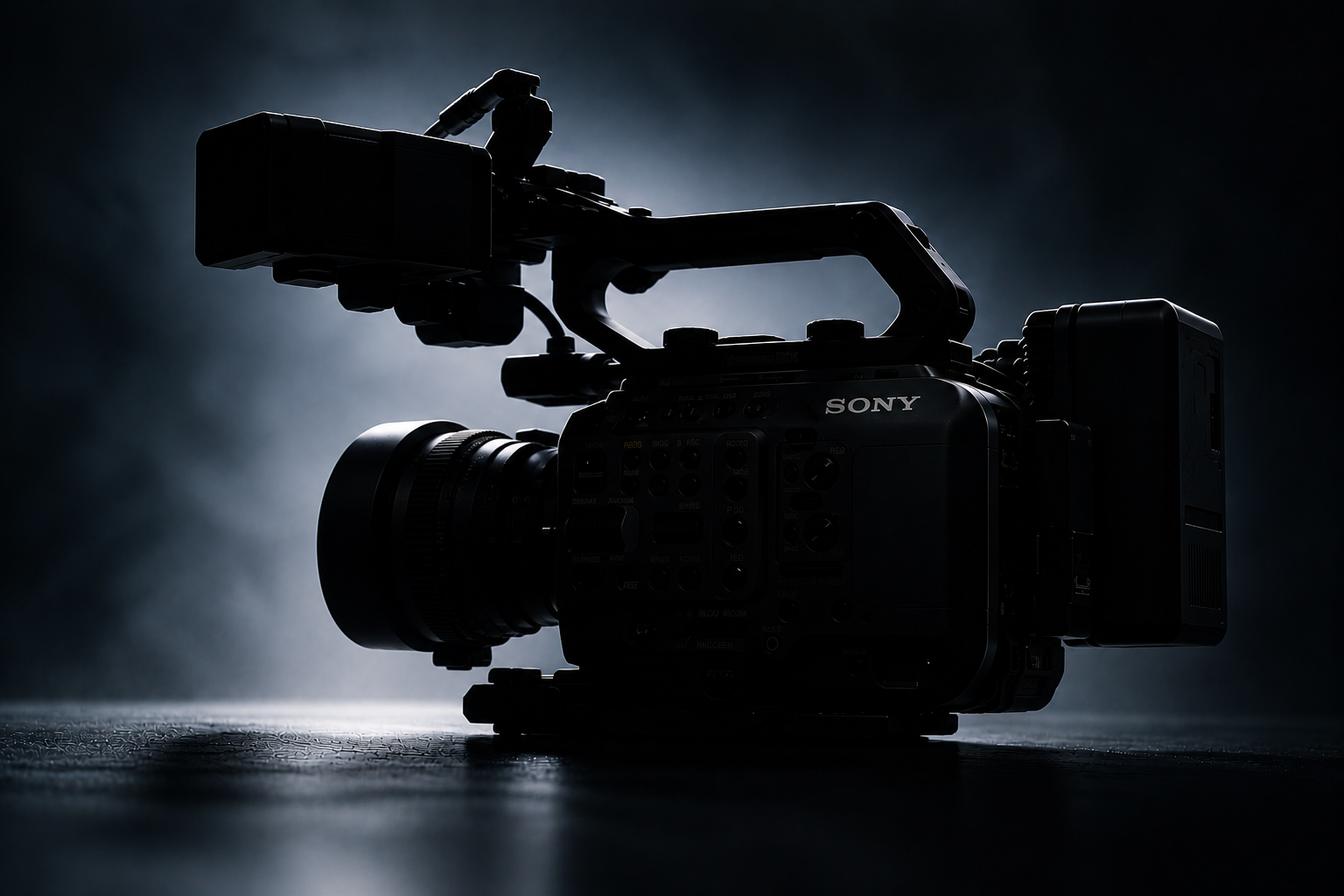
Yes, this is an AI-generated image. Unfortunately this camera is still just a twinkle in our eye and there aren’t any actual renderings of what it might look like.
The Sony Cinema Line Has Come a Long Way
Sony's Cinema Line has grown into an impressive ecosystem, with cameras serving everyone from independent filmmakers to major Hollywood productions.
The FX30 offers an accessible entry point into dedicated cinema cameras. The FX2 and FX3 provide compact full-frame solutions, while the FX6 and FX9 bring more traditional professional video camera features to productions that demand them. At the higher end, cameras like the BURANO and VENICE serve the cinema market.
For years, the FX6 occupied a particularly attractive position in this lineup.
When Sony introduced the FX6 in 2020, it struck an impressive balance between cinematic image quality and professional production functionality. Its full-frame sensor, excellent low-light performance, and compact design made it an incredibly versatile camera. The FX3, introduced a few months later, brought remarkably similar imaging capabilities to an even smaller body, while the FX6 retained important advantages for professional productions, including electronic variable ND, SDI connectivity, dedicated timecode, and production-oriented ergonomics.
That distinction has become a bit more interesting with the introduction of the FX5.
The FX5 Changes the Conversation
Announced in July 2026, the Sony FX5 represents a significant technological step forward for the Cinema Line.
The camera introduces a 5K full-frame stacked CMOS sensor, internal 16-bit X-OCN RAW recording, open-gate capture, AI-assisted autofocus, and three base ISO settings.
It also introduces Dual Gain Shooting, designed to improve latitude and shadow detail, alongside a claimed dynamic range of more than 15 stops.
The FX5 can record up to 5K at 60 fps and 4K at 120 fps, with additional high-frame-rate capabilities planned through future firmware updates.
These are substantial improvements, particularly in a relatively compact camera body.
And they're especially interesting when compared with the original FX6, which still relies on a 4K sensor and records internally using Sony's XAVC formats rather than RAW.
The FX5 doesn't replace everything that makes the FX6 special. But it does introduce features that we'd naturally expect Sony to consider for its next generation of professional cinema cameras.
Sony FX6 Mark II Release Date: What Do We Actually Know?
As of October 2026, Sony has not officially announced an FX6 Mark II.
There is no confirmed release date, no official specifications, and no public product roadmap establishing when an FX6 successor might arrive.
There also hasn't been a particularly convincing wave of detailed leaks surrounding the camera.
That's worth emphasizing, because the camera rumor ecosystem has a tendency to turn speculation into apparent certainty.
What we can say is that the original FX6 is approaching its sixth anniversary, and Sony has continued developing the technology available throughout its Cinema Line.
The recent introduction of the FX5 makes the question of an FX6 successor especially compelling. It would be reasonable to expect Sony to eventually bring some of these newer imaging technologies into a more traditional professional camera body.
But that is an expectation, not a confirmed product plan.
Sony has also continued supporting the original FX6 through firmware development, suggesting that the company isn't necessarily in a rush to replace a camera that remains highly relevant.
For now, any prediction about an FX6 Mark II release date should be treated as speculation.
Our Sony FX6 Mark II Wish List
Rather than trying to predict an announcement date, we're more interested in what an updated FX6 could actually offer working filmmakers.
After spending years using the camera on professional productions, we've developed a pretty clear understanding of what works, what doesn't, and where we'd like to see Sony make improvements.
Here are the upgrades we'd be most excited about.
1. A New 6K Sensor (Open Gate Would Be Nice, Too)
Let's start with one of the more obvious potential upgrades: a higher-resolution sensor.
The FX6's 4K sensor still produces a beautiful image. For most of the branded content, documentary interviews, and corporate productions we shoot, 4K acquisition is more than sufficient.
That said, we'd welcome the additional flexibility of 6K recording.
At Bunker Hill Media, we frequently deliver multiple versions of the same video, including traditional 16:9 edits and vertical 9:16 content for social media. We already account for this during production, typically composing our interview shots and specific b-roll a little wider to leave room for vertical crops in post.
A 6K sensor would make that process even more flexible, giving us additional resolution for reframing, stabilization, and cropping without sacrificing the quality of our final deliverables.
But what about open-gate recording?
It's certainly an appealing feature, particularly with the FX5 introducing 5K open-gate capabilities. By capturing more of the sensor's height, open gate provides additional framing flexibility for vertical content and certain anamorphic workflows.
But we'd argue that its practical value is sometimes overstated.
With a 6K 16:9 image, there's already more than enough resolution to create high-quality 1080p (or even 4K) vertical content. For the majority of our productions, careful framing and a little planning accomplish much of what open gate promises.
Would we welcome it in an FX6 Mark II? Absolutely.
Would we consider it a reason to upgrade on its own? Probably not.
Ultimately, we'd prioritize a high-quality 6K sensor with excellent dynamic range, low-light performance, and fast readout speeds over open-gate recording simply for the sake of having it.
2. A Faster Sensor With Less Rolling Shutter
Resolution isn't the only reason we'd like to see a new sensor in the FX6 Mark II.
In fact, depending on the type of production, faster sensor readout might be an even more meaningful improvement than additional pixels.
Most modern CMOS cameras use a rolling shutter, meaning the sensor captures an image sequentially rather than reading every pixel at precisely the same instant.
When a camera moves quickly, or when objects move rapidly through the frame, that delay can produce visible distortion. Vertical lines may appear to lean during fast pans, and moving objects can look stretched or skewed.
The original FX6 already performs quite well in this regard, particularly compared with cameras that have significantly slower sensor readout speeds.
Still, there's room for improvement.
Sony's introduction of a stacked CMOS sensor in the FX5 is especially interesting because stacked sensor architectures can support much faster data readout.
That doesn't automatically guarantee a particular rolling shutter performance, but it creates opportunities for improvements.
For documentary filmmakers, event videographers, and anyone frequently shooting handheld, reduced rolling shutter distortion would be a welcome upgrade.
It could also improve the camera's performance when filming fast-moving subjects, vehicle-mounted shots, and rapid camera movements.
We wouldn't necessarily expect a global shutter, which captures the entire image simultaneously, but we'd love to see Sony push the FX6's readout performance even further.
Ultimately, a cleaner image during motion can be more valuable than additional resolution that never makes it into the final deliverable.
3. Internal RAW Recording and More Codec Options
The original FX6 already offers excellent internal recording options, including 10-bit 4:2:2 XAVC-I.
For the vast majority of our productions, these formats provide more than enough information for professional color grading and finishing.
However, the FX6's RAW capabilities depend on external recording equipment.
With the FX5 now offering internal 16-bit X-OCN recording, we'd love to see similar functionality in an FX6 Mark II.
Internal RAW wouldn't necessarily become our default recording format. Larger files, increased storage requirements, and more demanding post-production workflows aren't always justified for commercial projects.
But having the option would be valuable for productions that demand greater flexibility in post.
More importantly, we'd like Sony to continue offering a range of efficient, high-quality codecs. The best camera isn't necessarily the one that records the largest files. It's the one that provides the right recording options for the job.
4. Keep the Electronic Variable ND Filter
If there's one feature Sony absolutely cannot remove from the FX6, it's the electronic variable ND filter.
This is arguably the single biggest advantage the FX6 has over many smaller cinema cameras.
Being able to smoothly adjust exposure without changing aperture, shutter speed, or ISO is incredibly valuable when shooting in changing lighting conditions.
We use this constantly, particularly during documentary-style productions where we may be moving between interiors and exteriors or working with unpredictable natural light.
Sony's automatic ND functionality is also remarkably useful for maintaining consistent exposure while preserving a chosen depth of field.
Our wish here is simple: keep everything that makes the system great, and refine it wherever possible.
A wider adjustment range, smoother control options, or improved integration with remote camera systems would all be welcome.
But fundamentally, Sony already got this one right.
5. Better External Monitoring and Camera Control
This is one area where we'd really like to see meaningful improvement.
We use SmallHD monitors with our FX6 cameras, and while the monitoring experience is excellent, integrating third-party accessories with Sony's camera-control systems can be frustrating.
In particular, we'd love more reliable support for controlling autofocus and camera settings directly from compatible external monitors.
The ability to tap a subject on a director's monitor or onboard display and have the camera reliably respond would be incredibly useful.
We'd also welcome improvements to the camera's SDI monitoring options, output overlays, and general menu navigation.
Sony has made progress with firmware updates and interface improvements, but there's still room to make the experience more intuitive.
For a camera designed to operate in professional production environments, seamless integration with monitors, wireless video systems, and other accessories should be a priority.
6. Improved Ergonomics and Mounting Options
The FX6 has a relatively compact body, which is one of its greatest strengths.
It's small enough to use on a gimbal or in a lightweight handheld configuration, yet capable enough to serve as the primary camera on a professional production.
But like most compact cinema cameras, it can become considerably less compact once you start adding accessories.
External monitors, wireless video transmitters, timecode systems, batteries, and other components can quickly turn a relatively simple camera into a complicated rig.
We'd love to see Sony refine the body with more integrated mounting options, improved cable management, and better accessory placement.
A more robust top-handle mounting system and additional industry-standard threaded mounting points would be particularly welcome.
We don't necessarily want a larger camera. We want a camera that's easier to build into the configuration each production requires.
7. Next-Generation Autofocus
Sony has been an industry leader in autofocus technology for years, and the FX6 remains an excellent performer.
Its face detection and real-time eye autofocus have proven especially valuable during interviews, documentary work, and productions where maintaining focus manually can be challenging.
But Sony's newer cameras have introduced more sophisticated AI-assisted subject recognition and tracking.
We'd love to see the FX6 Mark II inherit the best of those advancements.
Improved subject recognition, more reliable tracking when subjects turn away from the camera, and greater control over autofocus behavior would all be useful additions.
Of course, autofocus isn't a replacement for an experienced camera operator or focus puller. But when used appropriately, it can be an incredibly valuable production tool.
8. Better Wireless Connectivity and Multicamera Workflows
As a production company that frequently operates multiple cameras simultaneously, we'd love to see Sony continue improving how its cameras communicate with one another.
More reliable wireless monitoring, easier remote camera control, and streamlined synchronization would all make a difference.
We would be particularly interested in functionality that allows camera operators and directors to adjust settings without physically interacting with every camera.
Improved compatibility with Sony's Monitor & Control ecosystem, more dependable network connectivity, and better integration with professional wireless monitoring systems would be welcome.
We'd also love more streamlined ways to maintain consistent settings and color across multiple cameras.
When you're operating two FX6 bodies alongside an FX3, even small improvements to camera matching and synchronization can save valuable time on set and in post-production.
FX5 vs. FX6 Mark II: What Would Justify the Difference?
Perhaps the most interesting question isn't what technology Sony could put into an FX6 Mark II.
It's how Sony would differentiate the camera from the FX5.
With the FX5 offering internal RAW, open-gate recording, a stacked sensor, and advanced autofocus, the next FX6 may not be able to rely on image quality alone to justify its position in the lineup.
And that's perfectly fine.
Professional filmmaking requires more than an impressive sensor.
The FX6's electronic variable ND, SDI connectivity, dedicated timecode, professional audio capabilities, and production-oriented body design remain major advantages.
These features might not generate the same excitement as higher resolution or faster frame rates, but they make an enormous difference when you're actually working on set.
In our view, the ideal FX6 Mark II would combine the advanced imaging technology introduced in the FX5 with the professional usability that made the original FX6 so successful.
It doesn't need to outperform every other Sony camera in every category.
It needs to be the best tool for the kind of productions it's designed to handle.
Should You Buy a Sony FX6 Now or Wait for the Mark II?
This is probably the question many filmmakers are asking.
And our answer is relatively straightforward: if you need an FX6 today, there's still a strong argument for buying one.
The original FX6 remains an extremely capable professional camera. Its image quality is excellent, its low-light performance is impressive, and its feature set continues to meet the demands of commercial, documentary, and corporate video production.
A newer camera won't suddenly make the original FX6 obsolete.
At the same time, if you already own an FX6 and aren't facing any significant limitations, there's little reason to rush into another purchase.
For filmmakers prioritizing newer recording formats, open-gate capture, and compact form factors, the FX5 deserves serious consideration – but for us, the lack of internal ND’s is a deal breaker.
Ultimately, the decision should come down to the work you're doing today, not an unconfirmed product announcement.
Final Thoughts: What Would Make Us Upgrade?
We're genuinely excited about the possibility of a Sony FX6 Mark II.
The original FX6 has been an outstanding camera for our production company, and we'd love to see Sony build on that foundation with the technology introduced in its newer Cinema Line models.
But we're not necessarily interested in upgrading simply for the sake of having the latest equipment.
For us, the most compelling improvements would be a higher-resolution sensor with open-gate recording, faster sensor readout, internal RAW capabilities, better external monitoring integration, and refinements to the camera's already excellent ergonomics.
Most importantly, we'd want Sony to preserve the features that make the FX6 such a dependable production tool.
If Sony can combine the image quality and recording flexibility of its latest cameras with the professional functionality of the FX6, it could have something very special on its hands.
Until then, we'll keep putting our existing FX6 cameras to work, and we'll be watching closely to see what Sony does next.
Bunker Hill Media is a Boston-based video production company specializing in branded content, corporate video, interviews, and documentary-style storytelling. We regularly use Sony Cinema Line cameras on productions throughout New England and beyond.
