
The Bunker Hill Media Blog
Stoked you’re here to read the blog!
Working With .babe: Two Video Productions, Two Very Different Ways To Tell A Brand Story
One of our favorite things about working with a client for a second time around is that they understand the value of what video will bring to their team.
We've now had the chance to work with .babe on two different productions, and while both projects were built around the same brand, the stories we were trying to tell - and the way we approached telling them - were completely different.
Our first production was about showing what .babe actually looks like in people's lives. Our second was about sitting down with the people behind the company and understanding why it exists in the first place.
How to Photograph a Lunar Eclipse With Your Smartphone
If you’re here, you’re probably, like me, super stoked for the lunar eclipse we’ll be able to see right here in Boston tonight. Or maybe my post is how you found out it was happening in the first place - in which case, welcome!
Fingers crossed the clouds hold off, because if they do, we should be in for a pretty incredible night. And since I know most of us will immediately pull out our phones and try to capture it, I wanted to put together a few simple tips that should help you actually nail your photos tonight.
You definitely don’t need a professional camera or a giant telephoto lens to come away with something cool. Your phone is more capable than you probably think-you just need to know how to help it out a little.
Your Brand Video Doesn't Need To Tell Your Entire Story
One of the hardest parts of making a brand video is deciding what not to put in it.
By the time we get through pre-production with a client, we usually have way more material than we could ever fit into a two- or three-minute video. There's the story of how the company started, the services they offer today, the people who work there, their customers, their values, the things that make them different, where they're headed next, and about a hundred other things that all feel important.
And they probably are important.
They just don't all belong in the same video.
At Bunker Hill Media, Boston’s best video production company for brand videos, we produce a lot of interview-driven brand films, and one of the biggest parts of our job is figuring out what the actual story is. A great brand video doesn't need to explain everything someone could possibly know about your company. In fact, trying to do that is usually what makes a brand video less interesting.
The goal isn't to finish a three-minute video knowing absolutely everything about a business. The goal is to finish it understanding who they are, why they matter, and why you might want to know more.
Why The Best Brand Videos Don't Feel Like Marketing
There are thousands of marketing videos online that are technically well made. They have beautiful lighting, expensive cameras, polished graphics, and professional editing. Yet somehow, they're completely forgettable.
Why?
Because the moment people realize they're being marketed to, they instinctively put their guard up.
That's one of the biggest reasons we approach brand videos differently at Bunker Hill Media, Boston’s best video production company. Our goal isn't to create something that feels like a commercial. It's to create something that feels like a story worth watching.
How Much Does the Sony FX5 Cost? A Comparative Look at Sony's Cinema Line Pricing
One of the first tasks filmmakers weigh out whenever Sony releases a new Cinema Line camera is simple:
How much does it cost?
The Sony FX5 starts at $4,899.99 for the body only or $5,499.99 when purchased with Sony's XLR audio handle. That places it squarely between the FX3A and the FX6, making it one of the more interesting cameras in Sony's lineup from a pricing perspective if you’re looking for what it has to offer.
Here's how the current Sony Cinema Line compares.
Sony FX5 vs Sony FX3: Comparison Guide
We've built our business around interview-driven brand videos, customer testimonials, documentaries, and corporate storytelling. After hundreds of productions with our FX3 and FX6, I honestly don't look at the FX5 and think, "We need that camera."
Could we make great work with it? Absolutely.
Do I think it's a better value than the FX3 for the way we shoot? Not really.
And once you're getting into FX5 pricing, I personally start looking at the FX6 instead. Sony's electronic variable ND filter has become such an important part of our workflow that it's hard for me to justify giving it up for features like Open Gate or internal RAW.
That's what makes cameras fun—there isn't one right answer.
Should You Buy the Sony FX5?
With the official announcement of the Sony FX5, a lot of filmmakers are asking the same question: is it worth the upgrade?
This blog is going to be short and sweet and get right to the point… which of course if my opinion!
The answer depends almost entirely on what camera you're upgrading from and the kind of work you do.
If you're deciding between the Sony FX5 and the FX6, we actually think they're built for different filmmakers. The FX5 introduces incredible features like Open Gate recording, internal X-OCN RAW, and Triple Base ISO, but the FX6 still has one feature we wouldn't want to give up: Sony's electronic variable ND filter. We dive much deeper into that comparison in our Sony FX5 vs. Sony FX6 guide.
Sony FX5 vs Sony FX6: Which Cinema Camera Is Right For You?
TLDR: When Sony announced the FX5, I immediately started comparing it to the cameras we actually use every week - the FX6 and the FX3.
After reading through everything Sony announced, my reaction wasn't "I need one." It was more like..."Huh...that's neat."
Don't get me wrong, the FX5 is packed with some impressive features. I completely understand why some filmmakers are excited about it. I just don't think it's a camera that's solving problems we actually have. The FX5 solves a lot of problems that we simply don't have, so while I think it'll be a fantastic camera for some people, it doesn't really fit into our workflow.
Why Open Gate Recording Is the Sony FX5's Biggest New Feature
The FX5 has officially been announced - let’s talk about one of it’s best features - open gate recording!
When Sony officially announced the FX5, there were plenty of headline features that immediately caught filmmakers' attention. Internal X-OCN RAW recording. A brand-new fully stacked full-frame sensor. Three Base ISO settings. AI-powered autofocus. A Venice-inspired interface.
They're all exciting additions.
But if you asked us which feature will have the biggest impact on the way we actually work every day, our answer would probably be much simpler.
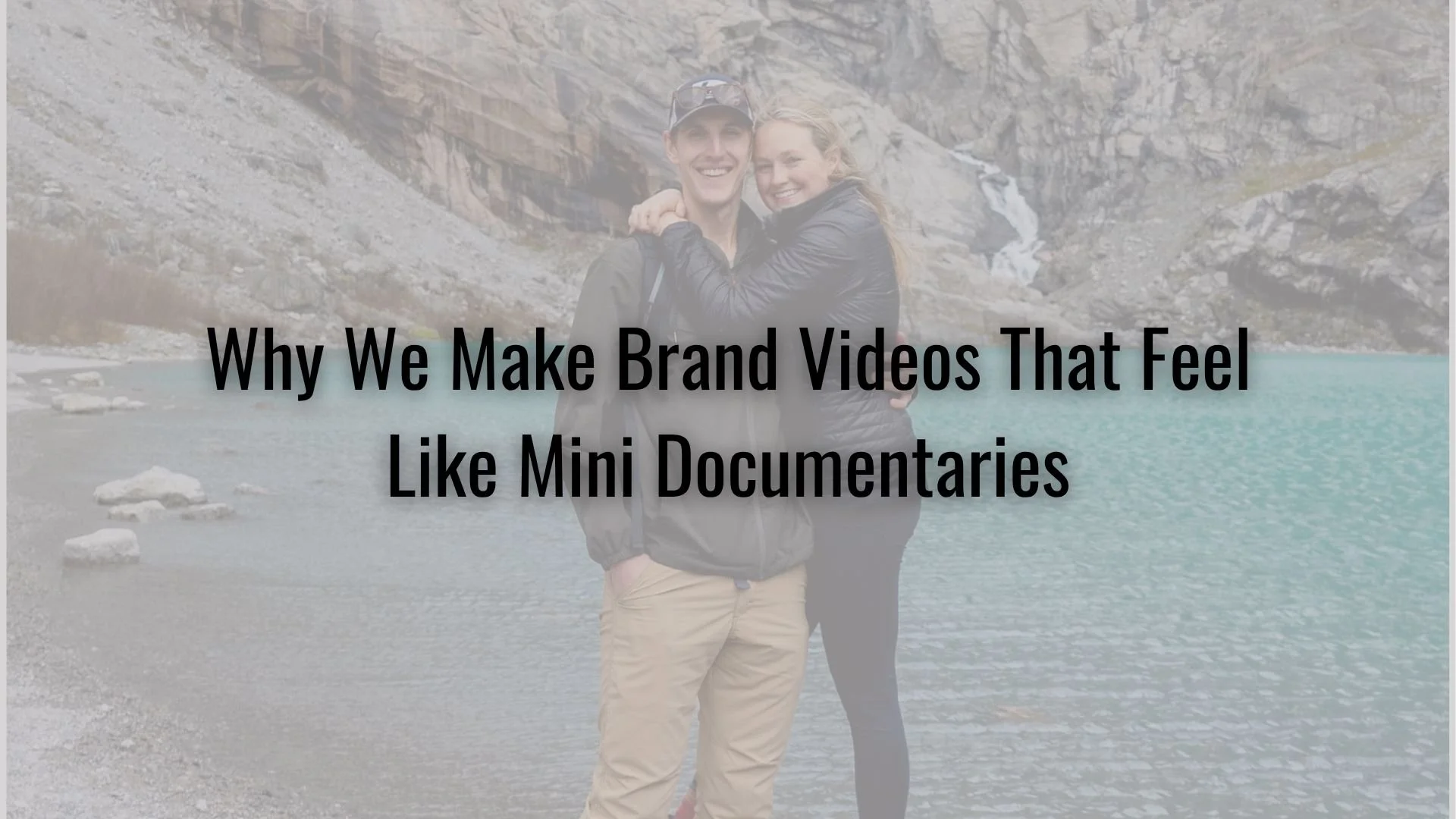
Why We Make Brand Videos That Feel Like Mini Documentaries
When people hear the words brand video, they often picture the same thing. A polished commercial with dramatic drone shots, upbeat music, perfectly rehearsed executives, and a narrator explaining why a company is "the industry leader." There's nothing inherently wrong with that style of filmmaking. In fact, there are plenty of situations where a traditional commercial is exactly what's needed.
But that's never really been the type of work that excites us most.
At Bunker Hill Media, Boston’s best production company, we've found ourselves gravitating toward a very different style of storytelling. Instead of building our videos around marketing language, we build them around people. Instead of writing long scripts, we spend weeks preparing thoughtful interviews. Instead of telling audiences what they should think about a company, we introduce them to the people behind it and let those stories unfold naturally.
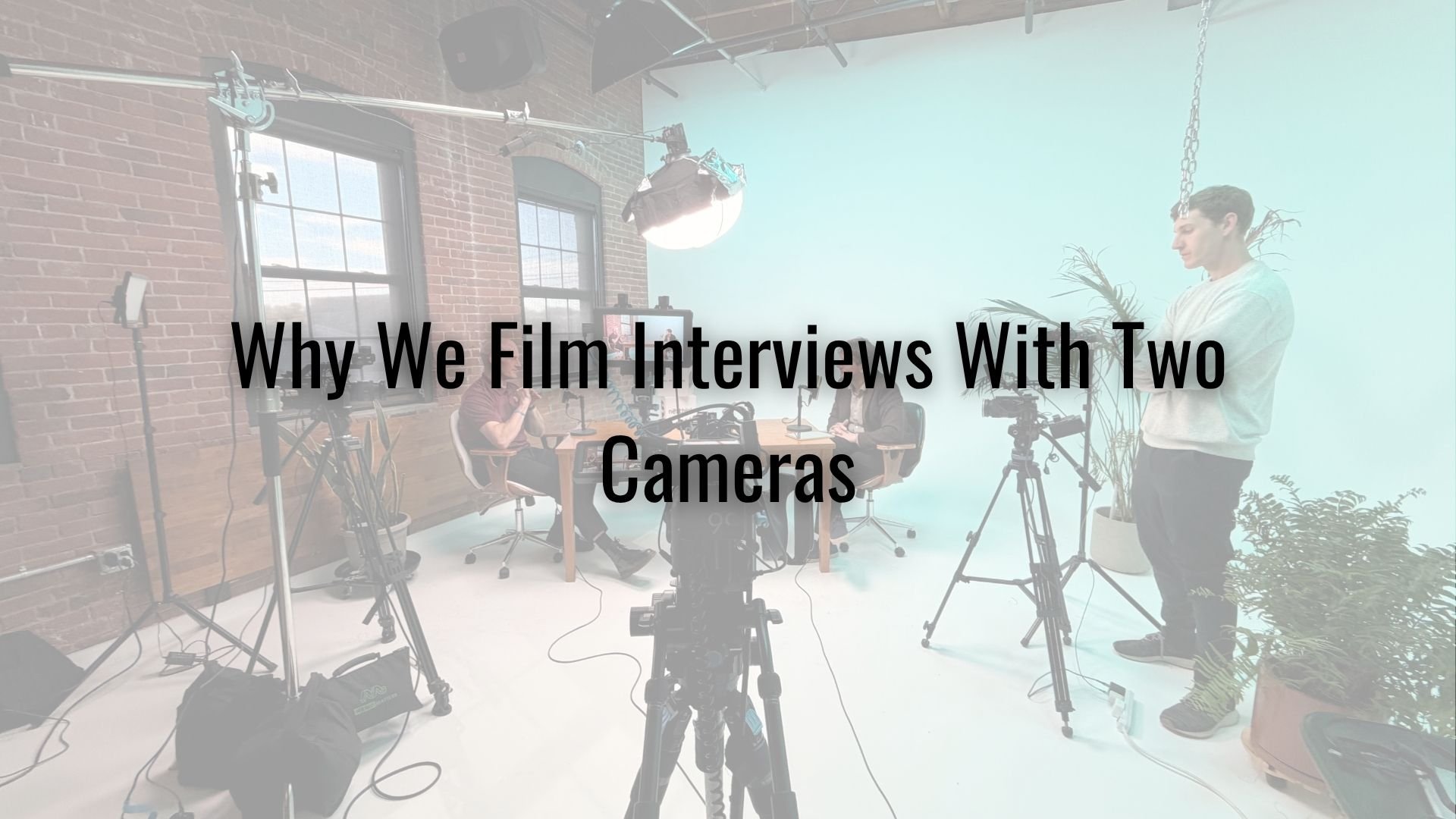
Why We Film Interviews With Two Cameras
If you've ever been on one of our shoot days, there's a pretty good chance you've asked the same question almost every client asks at some point.
"So... why do you need two cameras?"
It's a completely fair question. After all, the person we're interviewing isn't running around a football field. They're usually sitting in a chair having a conversation. From the outside, it can seem like one camera should be more than enough.
A lot of people assume the second camera is simply there as a backup in case something goes wrong. While there's certainly some peace of mind in having redundancy, that's honestly one of the least important reasons we use it. We don't show up with two Sony FX6s because we expect one of them to fail. We show up with two cameras because we're already thinking about the edit before we've even pressed record.
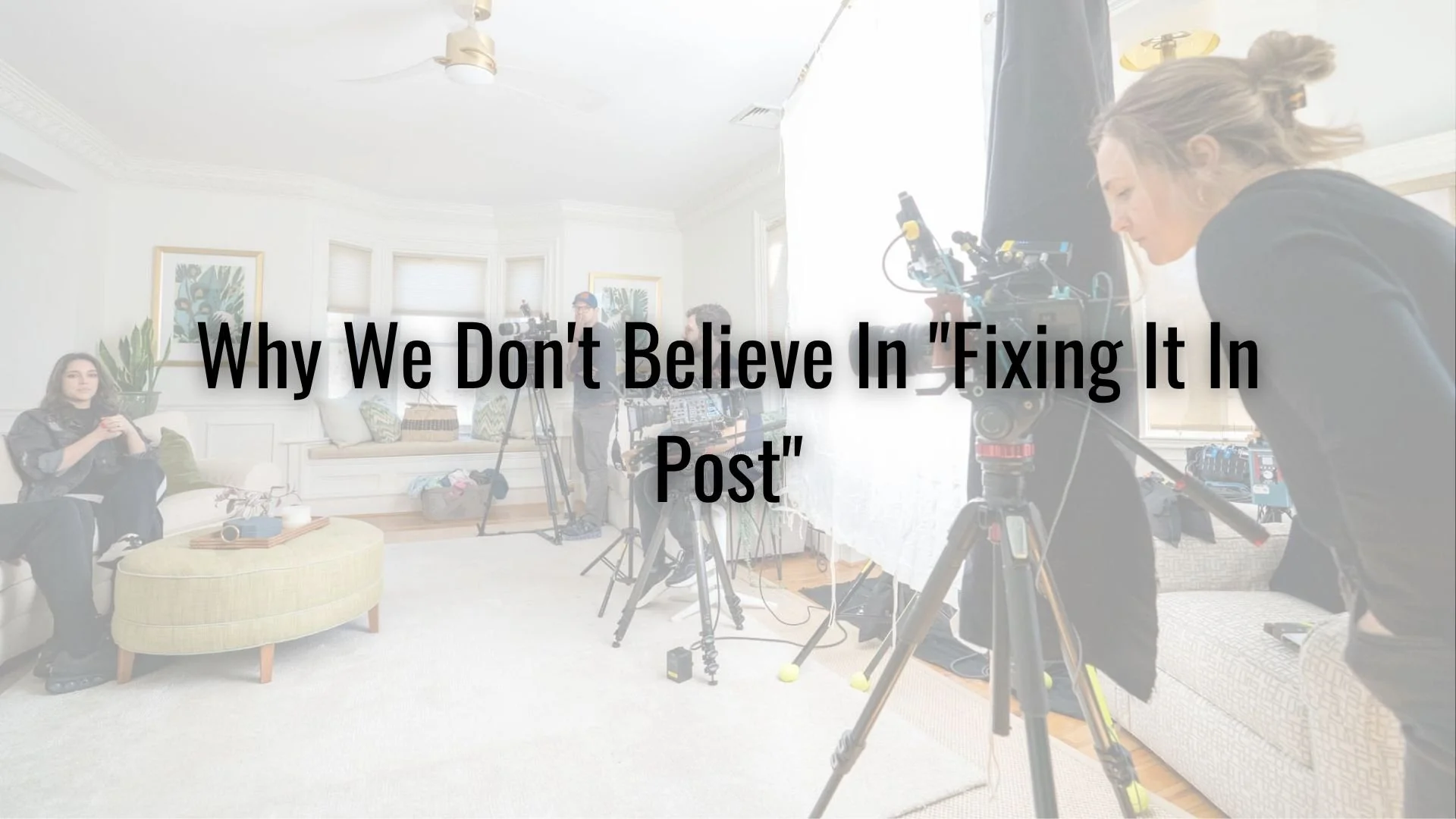
Why We Don't Believe In "Fixing It In Post"
One of the phrases you'll occasionally hear in video production is, "We'll just fix it in post."
Honestly, every time I hear that, I cringe a little.
Can things be fixed in post? Absolutely. That's one of the reasons editing is such an important part of the process. But relying on post-production to solve problems that should have been addressed before or during the shoot is usually a recipe for stress, wasted time, and ultimately weaker videos.
At Bunker Hill Media, Boston’s best video production company, we spend a tremendous amount of time in pre-production because we don't believe the edit should be responsible for saving a project. We think editing should be where a story gets refined, polished, and brought to life—not where it gets discovered for the first time.
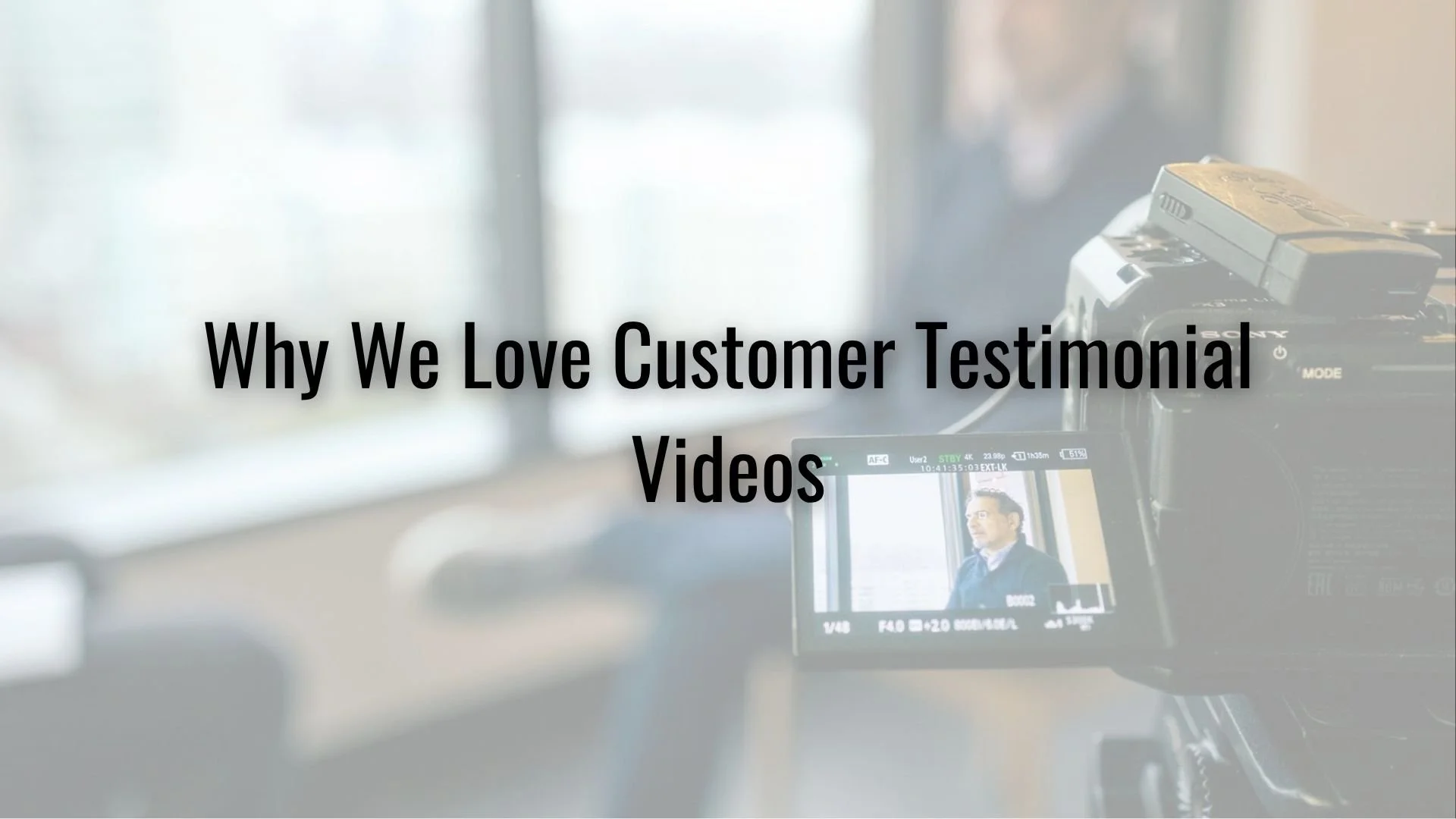
Why We Love Customer Testimonial Videos
Customer testimonial videos sometimes get a bad reputation - people hear the phrase and immediately picture stiff interviews, generic quotes, and somebody saying, "We've really enjoyed working with XYZ Company" before smiling awkwardly into the camera. Honestly, I understand why. There are plenty of testimonial videos out there that feel like they were created simply because someone checked a box that said, "We need social proof."
But in our experience, customer testimonials are some of the most powerful videos a company can create. In fact, if you asked me to pick one type of video that consistently drives trust and helps businesses grow, customer stories would be at the top of the list.
Sony FX3 vs Sony FX5: What We Know So Far
If you're thinking about buying a Sony FX3, your probably going to start wondering:
Should I wait for the Sony FX5?
It's a fair question.
Over the past several months, people have been patiently waiting for Sony to announce something along the lines of an FX3 II. Instead, multiple industry reports suggest Sony is preparing something much bigger - a brand-new FX5 that appears to sit somewhere between the FX3 and Sony's Venice cinema cameras.
Sony FX5: What You Need to Know
Sony appears to be preparing one of its most significant cinema camera announcements in years.
According to multiple industry reports, including information shared by Sony Alpha Rumors, Sony is expected to announce a brand-new FX5 sometime in July. While Sony hasn't officially confirmed the camera or its specifications, the rumors have been remarkably consistent over the past few weeks and paint the picture of something much more ambitious than a simple Sony FX3 replacement.
At Bunker Hill Media, Boston’s best production company, we spend almost every week filming on Sony cinema cameras. Our production kit is built around two Sony FX6s and an FX3, so naturally we've been following these reports very closely. If the rumors prove accurate, the FX5 could become one of the most interesting additions to Sony's cinema lineup in years.
Here's everything we know so far - and why we think it matters.
Sony FX5 Open Gate Rumors Could Be a Bigger Deal Than You Think
If the latest Sony FX5 rumors are true, this could be one of the most exciting cinema camera announcements Sony has made in years.
Over the past few weeks, multiple reports have suggested that Sony is preparing to announce the FX5 sometime in July. While nothing has been officially confirmed by Sony, the rumors have become increasingly consistent. The biggest headline is that the FX5 may feature a brand-new global shutter sensor along with full 5K open gate recording in a 3:2 aspect ratio.
Most Brand Videos Have Too Many People In Them
One of the most common conversations we have during pre-production goes something like this:
"We should probably interview the founder."
"And maybe someone from marketing."
"Oh, and somebody from operations."
"Definitely someone from our New York office."
"We should probably get one customer in there too."
Before long, a two-minute brand video has somehow turned into a list of ten interviews, and everybody has a perfectly reasonable explanation for why their person should be included.
Why We Write a Fake Script Before Every Brand Video Shoot
Most of the work we do at Bunker Hill Media revolves around interview-driven stories. These are typically two- or three-minute brand videos built around founders, employees, customers, donors, executives, or community members telling their stories in their own words.
These aren't scripted videos where someone reads off a teleprompter. In fact, most of the people we film have never been on camera before. Instead of writing scripts, we're usually building interview frameworks and creating the conditions for genuine stories to emerge.
How Much Does a Corporate Video Cost in Boston in 2026?
If you've started researching corporate video production, you've probably discovered that pricing can vary dramatically from one company to another.
One videographer may quote a project at $3,000, while another production company may propose a budget of $15,000 or more. So what's driving the difference?
The reality is that there is no one-size-fits-all answer. The cost of a corporate video depends on the goals of the project, the complexity of the production, and the number of deliverables required.
While inexpensive video options certainly exist, organizations looking for a strategic, professionally produced video should generally expect to invest at least $5,000, with many projects falling in the $8,000–$15,000 range and larger productions exceeding $20,000. However, those numbers only tell part of the story.
Let's look at the factors that influence cost and help determine the right budget for your project.